With this sort of possibility, players naturally want to make their deck the best they can and be able to play the best they can. There are several factors for players to consider: the types of decks that are most played at tournaments, cards that either become limited or banned, new card sets coming out and the street value of cards. This sort of information gathering and communication between players is known as the Metagame.

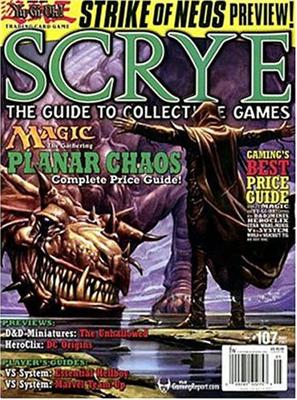
In the early days of CCGs, especially for Magic, keeping up on the latest trends meant magazines such as Inquest and Scrye to find out about the latest cards and strategies as well as your local game and hobby shop. Printed price guides also existed in order to compare the price of certain cards. Even with different set rarities, the values of cards were primarily based on their usefulness in the game, which in turn, raises the demand for them. As for finding out about new cards, aside from maybe a few previews in magazines, there was no way of doing so.
With the advent of the internet, many things changed. While in many cases, it meant that information published in magazines was now available online, this also meant that much more information could be circulated online. However, one of the biggest changes in this is that it is a lot easier for information about upcoming sets to be leaked online. Last year, I was able to find out about the entire Worldwake expansion a month before I saw it in the shops. This means that players have much more time to plan ahead, find the powerful cards from those sets and be able to get their hands on them while the prices are relatively low.
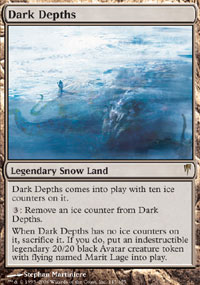
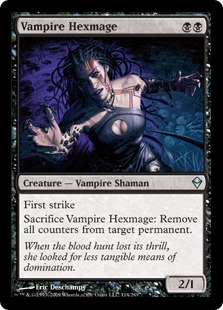
Left: Dark Depths. Right: The Card that causes it to become worth $25.00 more.

Speaking of prices, thanks to the internet, prices for cards can update rapidly. Although in the case of many cards, they change over time, if a new, devastating combo is discovered, it can increase the demand for the card, and thus, the cost. One example is the card Dark Depths. It was considered too slow to work with and too easily dealt with. It was only worth around $4.00. However, once a card released in Zendikar, Vampire Hexmage, allowed all the counters to be removed from it as early as turn 1-3 depending on the format, the price shot up all the way to $30.00 in less than a month. This, combined with the ease of gaining new information about future cards through the internet, makes the metagame even more fast paced, especially if you want to play both competitively and economically.

